

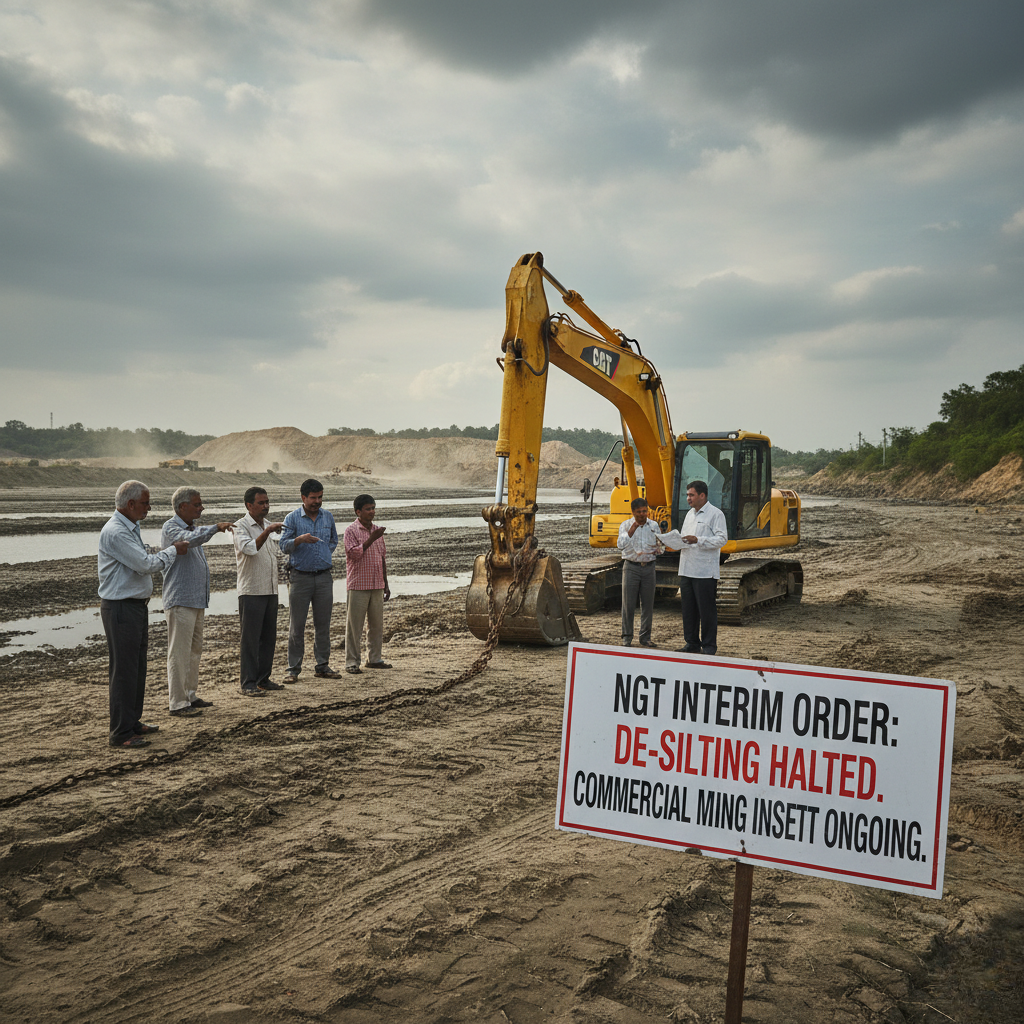
In a significant intervention to protect the environment and prevent illegal mining, the National Green Tribunal (NGT) has issued a directive to the Haryana government, ordering an immediate halt to de-silting work on the Somb River. The NGT’s decision, issued on February 11, 2026, comes amidst concerns that the de-silting project was being exploited for unauthorized commercial sand mining.
The NGT’s Interim Order:
- No Commencement Without Authorization: The NGT’s Principal Bench, comprising Chairperson Justice Prakash Shrivastava and Expert Member A Senthil Vel, explicitly instructed the state not to commence de-silting operations without due authorization. This effectively freezes any ongoing or planned activities in the riverbed.
- Investigating Environmental Violations: The Tribunal’s order stems from a petition alleging that the de-silting, purportedly for river maintenance, was being used as a cover for commercial sand extraction, a clear violation of Environmental Impact Assessment (EIA) notifications and sustainable mining practices.
The Project Under Scrutiny:
- Target Area: The de-silting project was slated to cover a 7-kilometer stretch of the Somb River, from Bamnauli village to Chhachhrauli in the Yamunanagar district.
- Official Justification: Authorities had initially justified the project as essential for reducing flood risk, improving water flow, and enhancing the river’s ecological health.
- The Allegation: Environmental activists and concerned citizens, however, raised alarms, claiming that heavy machinery and trucks were being deployed beyond what was necessary for de-silting, indicating large-scale sand extraction for commercial gain.
Implications and Next Steps:
- Environmental Impact: Unauthorized sand mining can lead to severe environmental degradation, including changes in river course, depletion of groundwater, destruction of aquatic habitats, and erosion of riverbanks.
- Further Hearings: The NGT has scheduled further hearings to thoroughly investigate the allegations. The state government will be required to submit detailed reports and justifications for its project, demonstrating compliance with environmental norms.
- Increased Scrutiny: This order signals a heightened scrutiny by environmental watchdogs on infrastructure projects, particularly those involving natural resources like riverbeds, to ensure ecological sustainability.